Keep It Weird. For Real.

I am back from South by Southwest. Interactive, that is. Most people would say this year’s interactive festival is a relative yawner, with no real huge splashy launches so characteristic of years past. Some posit it’s a sign of the privacy-seeking times. I think it’s something else, and fixable.

I encountered a symptom of the issue upon disembarkment. As I joined a taxi line that briefly reminded me of CES in Vegas (though this was far less painful — it was Austin, after all), I encountered this fellow:

suitatAUSTBerg

Despite the absence of skinny jeans and hoodie, I suspended all disbelief and inquired whether he was attending. He confirmed my bias when he said no. As a local, he was unsurprisingly disenchanted that he chose to arrive the same day Interactive was kicking off. And while it’s not just long-time attendees who lament that the event has gotten too big, Austinites have some influence on this. Per this one, the city subsidizes the event through lowered-to-no use fees – and locals plan to fight this. We’ll see how that goes.

Until then, the machine goes on.

To clarify, I have no complaints personally. My two panels were fantastic: Saturday morning I had the privilege to wax on about cause-related tech startups with great people from the Kapor Center for Social Impact and Code for America. And later in the day I tried to fend off imposter syndrome when I was asked to be a judge for startup blog TechCocktail‘s pitch competition along with (among others) a U.S. Senator and the former CEO & Chair of AOL.

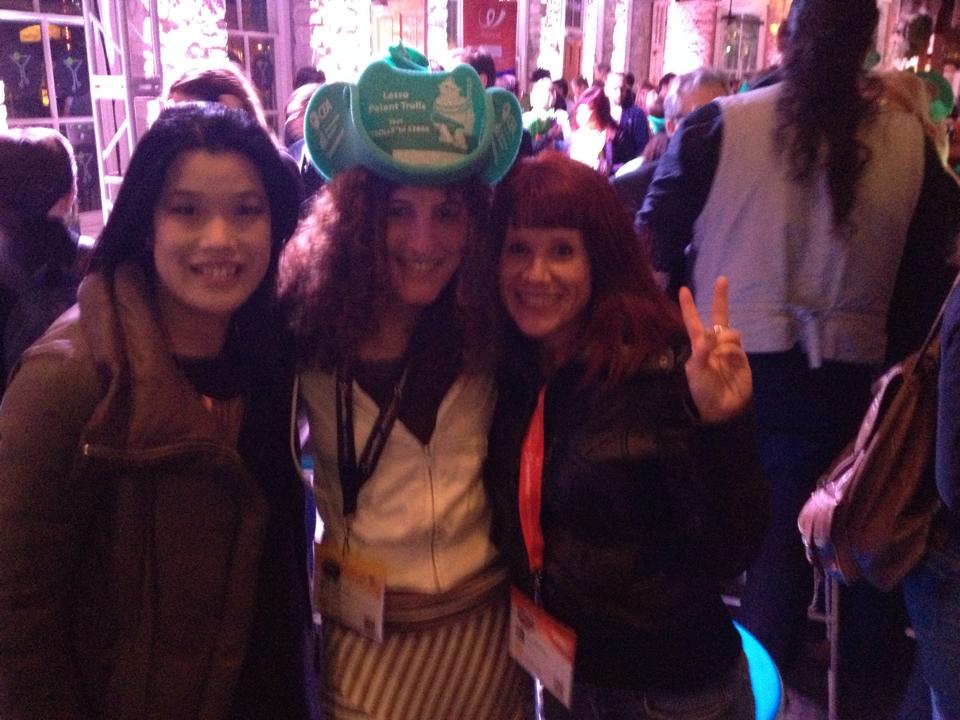
And of course, I got to go to parties and wear silly hats.
alicemedana

But many are discussing not only the unwieldy size of the event, but also the lack of ‘shizzle’ and I think I know why. It has to do with the fact that tech and launch events abound. But Austin itself is special. The core appeal of “South By” – the actual name itself being a tweak of a famous movie – is that it takes place in a town that is eccentric, arty and eclectic. It’s AUSTIN. Every single person I know who attends raves more about the City than the festival…


So it’s no wonder the event still manages to attract some top firepower at panels, keynotes and all kinds of breakouts. This year alone had Neil deGrasse Tyson, Edward Snowden and more….and a humble breakout hosted by EFF and Boing Boing had me conversing freely with some of the Internet’s original architects. Sure I can do this in San Francisco. But the density of people intentionally gathering for these conversations is special and reason enough to go.

But it could be so much more! Despite Interactive’s history of tapping into the musical and creative ethos of the place, it has strayed a little.

My friend Mykel – himself a cultural muse and former Angelino now happily residing in Austin – really nailed it. The music segment (happening now) really taps into the heart of Austin: the artists and the venues. Interactive, as it is currently tacked onto the front of the festival, doesn’t take advantage of this. You have tech startups running around in the 70s carpeted corporate Austin Convention Center, rushing to meet the latest blogger, and only stopping in to a bar after the program is over. Why not instead integrate — even make core — the awesomeness of Austin into what innovative startups have to offer?

And I’ll be real: I’m insanely jealous of all the peeps there THIS week. At the music festival, in venues, supporting artists creating music.

Certainly innovators can tap into this.

Keep SxSW Weird!

My Byline Here

When I worked in Communications at Charles Schwab, our CIO was a big believer in openness. He regularly met with employees at all levels and highly discouraged anonymity. This was a big deal because morale was low and many people wanted to “vent” in a way that they believed had little repercussions.

In retrospect, I could not agree with him more. With the exception of some extreme cases, the benefits of open far outweigh the benefits of anonymity.

Unfortunately, this is counter to what many libertarian-leaning people would have you think. For them, anonymity increases meritocracy, removing ‘barriers’ that may stifle expression such as title, education, race, gender.

If I lived in this vacuum of theory, I’d have to agree.

Ironically, however, most of these anonymity-proponents have never experienced these barriers themselves, and when we move from theory to reality, the picture changes. While it’s true that in very specific scenarios there are reasons to preserve anonymity, the vast majority of public exchange benefits from linkages to real-world identity. While the alleged barriers to meritocracy have yet to emerge as a significant force, the dark side of anonymity is all-too-prominent. When consequences are removed, conversation quickly devolves into corrosive exchange that scarcely resembles any form of constructive discourse.

And this goes “both ways”: when an entrepreneur sought to reverse the power equation by creating an app allowing women to anonymously rate men, the results were good for pretty much nobody. Again, no checks or balances to the ratings easily leads to all sorts of negative and potentially libelous behaviors.

The extreme of this happened late last year with Silk Road, the anonymous marketplace which served as a breeding ground for illegal activity and ultimately the channel for conspiracy to commit murder.

I applaud publications who are changing their commenting policies to preserve a semblance of true discourse and exchange. And I will observe the new wave of anonymous social apps with great curiosity and caution.

The Intoxication of Connection

We’re often admonished to “pay it forward” – that is, do things for others without receiving anything back. But the very term implies a form of payment….just that it’s already been received elsewhere. I prefer to think of Guy Kawasaki‘s “mensch” framework: in sum, just do the right thing…because it’s the right thing. And because I love connecting people, I’ve found myself doing it a lot as a natural course of action.

But if I’m honest with myself, I realize there is indeed a form of payment I relish: seeing exactly how my assistance leads to real, positive inspiration and change. So when people take the time to share about them, it is more than gold to me. A few highlights from this year that had an intoxicating effect for me:

  • From someone attending my HTML5DevConference talk on tools and resources for developers to become entrepreneurs:

    “Thank you for the talk. It gave me confidence that I might be able to get help for some of these crazy ideas I have knocking around in my head.”

  • Having coffee with a friend who reminded me that one introduction I made led to her taking a board seat; and another led to a key sponsorship for an event she helped promote (bonus: she even reminded them that I was the person to make the introduction in their meeting).

  • And what a kicker that is tough to top…from someone I had coffee with who beat out 300 applicants for a new job (excerpt):

    “…you were instrumental in helping me make it (to this new position). When we chatted back in March, you encouraged me to focus on my own interests, passions, and strengths. This focused my search….I wanted to thank you again for your advice that helped me find my way to this point. In fact, the Counselor told me that it was my genuine passion that made me stand out from the other candidates. For that alone, I wanted to thank you.”

Trust me, I certainly take satisfaction in being rewarded by things like recognition or money…but these instances show me that nothing quite matches the high of making a connection that leads to positive change.

So if someone helps you, take the time to loop back with them and report on the impact they had. It’s worth so much.

To a Connected 2014!